AKUSTIKTHERM
For thermal active building systems (TABS)
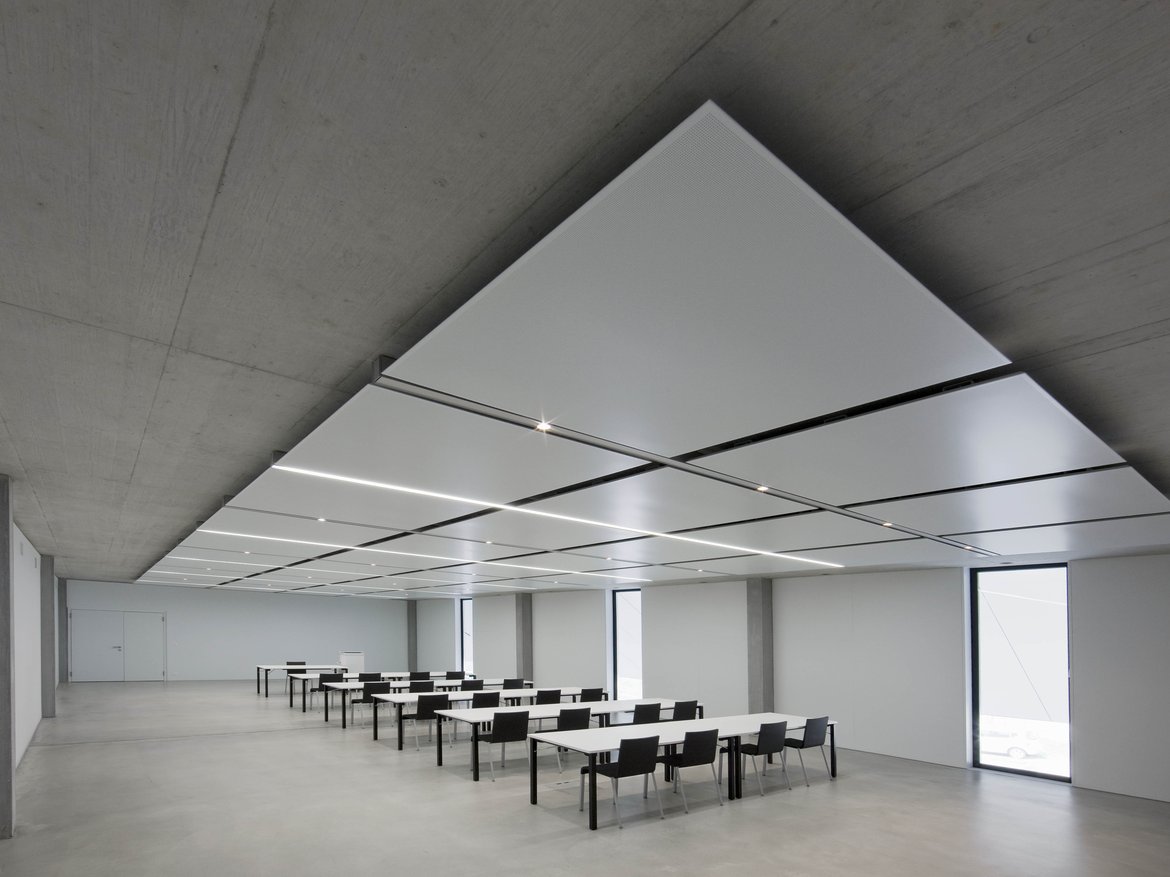
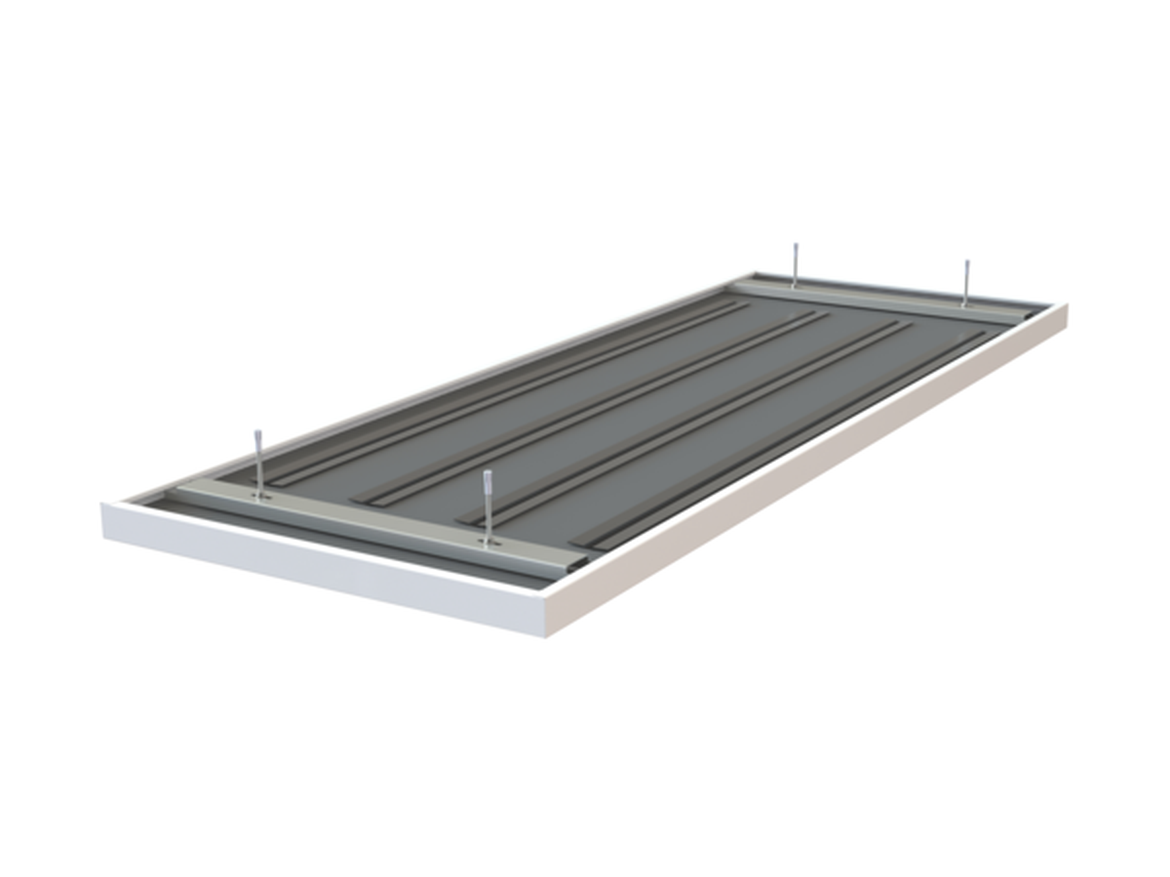
AKUSTIKTHERM is an acoustically effective and thermally conductive ceiling sail system for buildings with thermo-active building systems (TABS). The acoustic sail transfers thermal energy from the activated concrete surface into the room via an exchange system with a special coating, while also providing additional sound-absorbing surfaces.
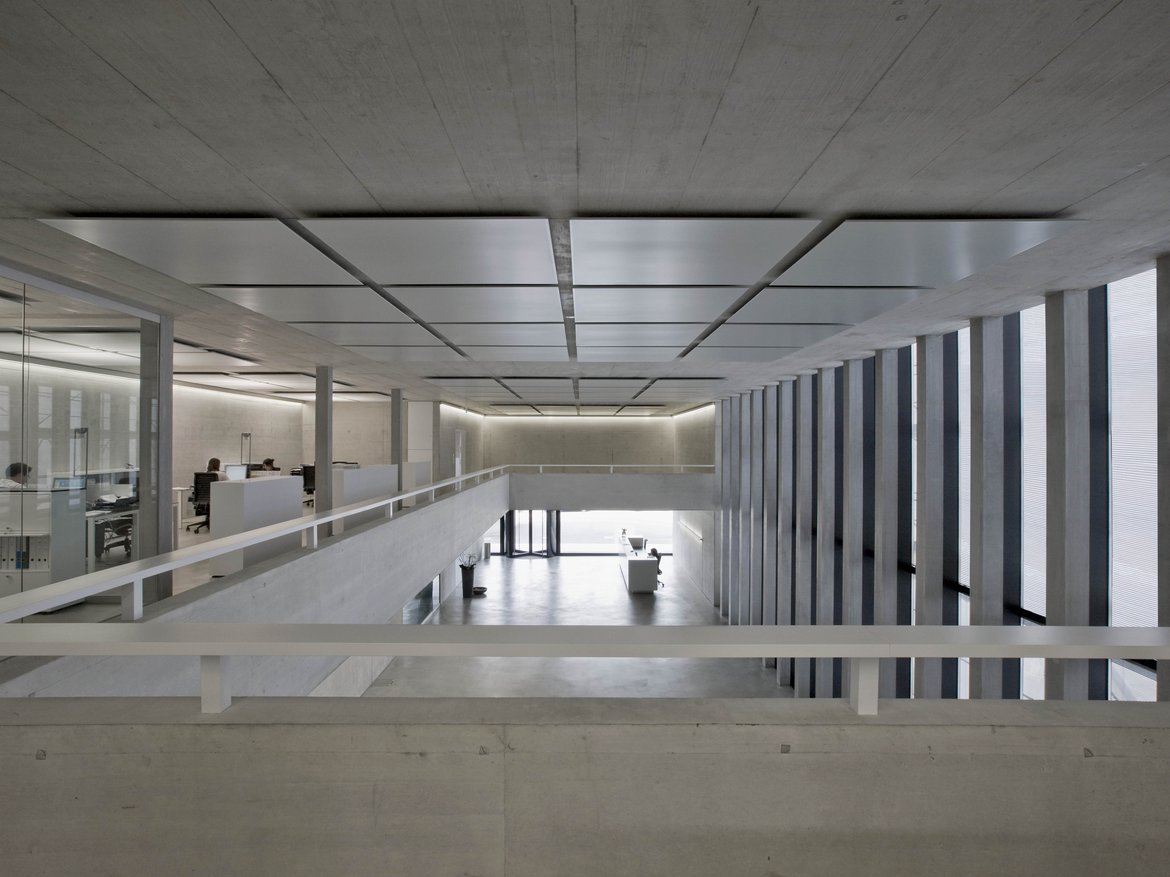
Whether in open-plan offices, event spaces or restaurants, AKUSTIKTHERM combines the thermal use of the activated concrete ceiling with targeted improvement of room acoustics.
Energy transfer
Installing AKUSTIKTHERM sails enables the thermal capacity of the activated concrete ceiling to be transferred into the room. At the same time, the sails support sound absorption in the room.
With a ceiling occupancy rate of 40 to 60%, AKUSTIKTHERM transfers 90 to 94% of the cooling capacity of the activated concrete ceiling into the room.
Contact us
- Suitable for retrofitting in buildings with thermo-active building systems (TABS)
- Building material class A2-s1, d0 according to EN 13501-1
- Superior sound absorption values (class A)
- Very low influence on component activation during cooling and heating
- Low installation height
- Low maintenance requirements
- Product components can be separated by material type
- Components can be integrated
|
Sound absorption
Classe A |
|
|
Carbon footprint
< 50 kg CO2/m² |
|


Sound absorption
As the largest unobstructed surface in a room, the ceiling is particularly well suited to sound absorption. The sound absorption class is determined in accordance with EN ISO 11654, based on measurements carried out in accordance with EN ISO 354 in accredited laboratories.
It serves as a parameter for acoustic designers to calculate the effect of a product on a room’s reverberation time.
Carbon footprint
The carbon footprint describes the greenhouse gas emissions associated with a product. These emissions are expressed as CO₂ equivalents. The life cycle stages considered are specified in the respective Environmental Product Declaration and its defined system boundaries.
An Environmental Product Declaration (EPD) transparently presents various environmental impacts of a product based on a life cycle assessment. The calculation is carried out in accordance with the standards and methodological requirements specified in the EPD. Where stated, the EPD is verified by an independent third party.
An Environmental Product Declaration (EPD) transparently presents various environmental impacts of a product based on a life cycle assessment. The calculation is carried out in accordance with the standards and methodological requirements specified in the EPD. Where stated, the EPD is verified by an independent third party.
Ceiling system
Sail
Operating principle
Type Base Plus: Radiation
Air supply
not relevant
Energy transfer TABS
90 – 94 %
Acoustics
αw: up to 1,0
Sound absorption class A
(EN ISO 11654)
Room comfort
Thermal comfort according to
EN ISO 7730, SIA 382/1
Functions